(480) 373-9949
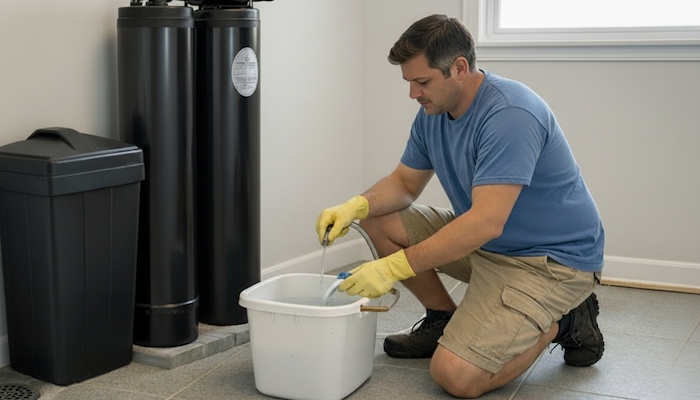
Phoenix residents know all too well how hard local water can be. With high levels of calcium, magnesium, and desert minerals in municipal supplies, water softeners work overtime to protect your plumbing, appliances, and water quality. But even the best systems need regular maintenance, especially when mineral deposits, salt bridges, and brine tank sludge build up inside.
If you’ve ever wondered “how do you clean a water softener?” or “is there a correct way to clean my brine tank?”, this guide walks you through a complete DIY water softener cleaning process that restores performance, prevents scale issues, and supports long‑term efficiency.
Why Cleaning Your Water Softener Matters in Phoenix
In the Arizona desert, water hardness levels often exceed 10–20 grains per gallon (gpg), a consequence of mineral‑rich Colorado River water, Salt River Project sources, and deep Phoenix groundwater.
Hard water minerals cause:
- Salt crusting and salt bridges in the brine tank
- Brine sludge buildup at the bottom of the tank
- Reduced regeneration cycles
- Resin fouling with iron and sediment
- Clogged distributor tubes and valve screens
- Appliances are wearing faster due to scale
- Soap scum, hard water spots, and cloudy dishes
If you don’t clean your softener periodically, it can lead to reduced softening efficiency, shorter resin life, and even system failure.
Key Water Softener Components You Should Know
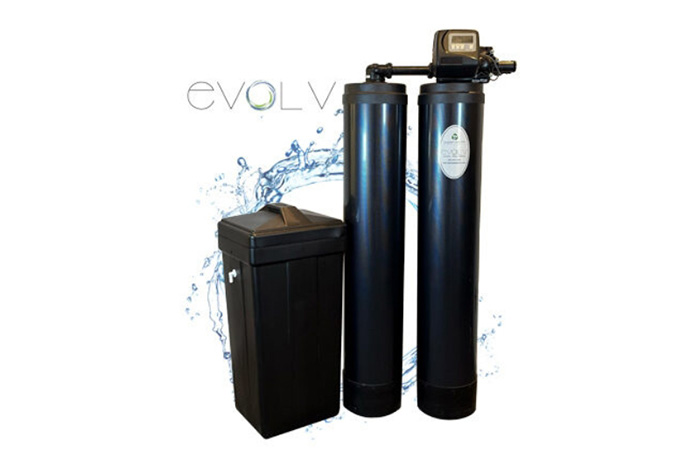
Before starting, it helps to understand the major parts of your system:
- Brine tank – Stores salt and holds the brine solution needed for regeneration
- Resin tank – Contains resin beads that exchange hard minerals for sodium
- Control valve – Manages flow and regeneration cycles
- Brine well & float valve – Controls salt and water levels
- Distributor tube & valve screen – Direct water flow in the resin tank
When Should You Clean Your Water Softener
Regular inspection and cleaning help prevent issues before they impact performance.
Signs your water softener needs cleaning include:
- Persistent salt crusting or salt bridge
- Bad odors from the brine tank
- Reduced soft water flow
- Frequent regeneration failure
- Brine sludge in tank bottom
- Iron buildup inside tanks or valve screen
- Cloudy water or hard water spots returning
Annual cleaning is recommended for most Phoenix homes; homes with heavy mineral content or high iron may need more frequent maintenance.
Tools and Supplies You’ll Need

Before starting your water softener cleaning project, gather:
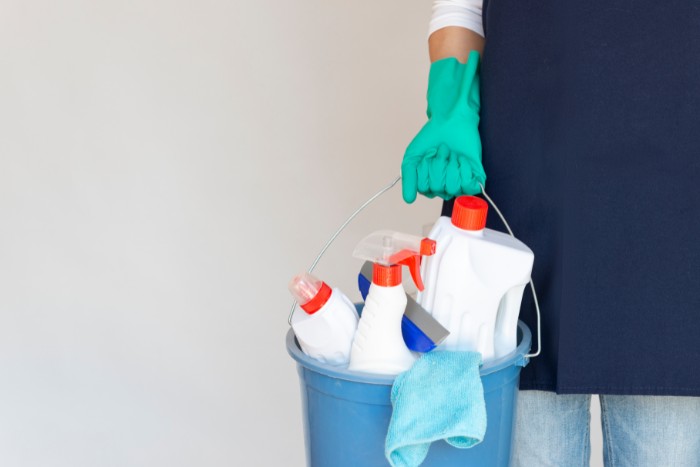
- Heavy‑duty work gloves
- Bucket and shop vac (wet/dry vacuum)
- Long‑handled brush
- Power washer (optional but helpful)
- Dish soap or gentle detergent
- Bleach or sanitizing solution
- Vinegar (optional)
- Gravel bed or outdoor pit (for brine disposal)
- Salt grid or platform (optional replacement part)
Preparation: Safety First
Before cleaning your system:
- Turn off the water softener and set it to bypass mode to stop water flow into the unit.
- Unplug the system from power to avoid accidental regenerations.
- Place a drain pan or buckets under plumbing where needed.
By keeping water and power disconnected, you can clean safely and thoroughly.
How to Clean Your Water Softener’s Brine Tank
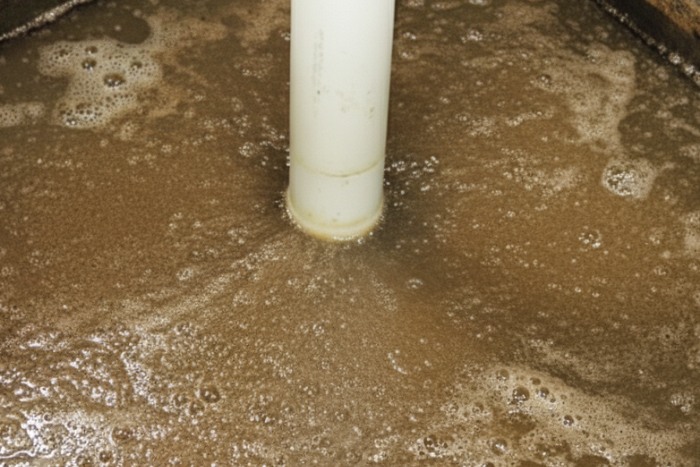
Cleaning the brine tank removes salt crust, sludge, and organic buildup that interfere with proper regeneration.
Follow these steps exactly:
- Prepare a dump area. Prepare a place to dispose of brine, such as a gravel bed or pit in the yard.
- Put the system in bypass mode. This stops water flow into the tank while you disconnect it.
- Unplug and disconnect the brine tank. Carefully lift the tank from your system.
- Dump the contents outside. Pour the brine and old salt into your prepared area.
- Clean the tank and valve. Remove and clean the salt plate with cold water and dish detergent. Use a long‑handled brush or power washer to scrub the inside of the tank.
- Sanitize the tank. Mix one quarter cup of bleach with 2–3 gallons of cold water and let it sit for 15 minutes.
- Scrub and rinse again. Empty the sanitizing solution, rinse thoroughly with clean water, and wipe down the tank and valve until dry.
- Reassemble the brine tank. Put the tank back, reconnect all lines, and take the system out of bypass mode.
- Add water and salt. Add five gallons of water to the brine tank, then at least two 50‑lb bags of water softener salt (solar salt is best for desert conditions).
- Let the salt sit. Wait about two hours so the salt begins to dissolve.
- Start a regeneration cycle. Initiate a manual regeneration to ensure everything is functioning properly.
Cleaning the Resin Tank and Valve
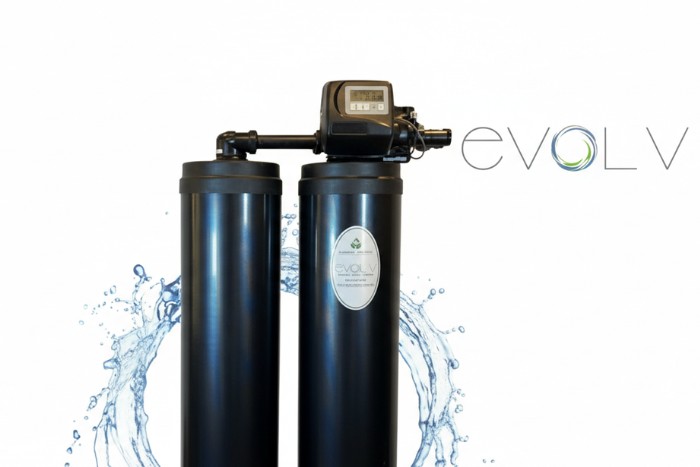
While the brine tank gets most of the attention, occasionally addressing the resin tank and control valve boosts efficiency:
Resin Tank Tips
- Check for iron buildup on resin beads, especially if you don’t have a pre‑filter.
- Use an Iron Out cleaner formulated for resin (follow manufacturer directions).
- Heavy iron or sediment may require resin replacement.
Control Valve and Screen
- Remove and rinse the valve screen if clogged with sediment.
- Inspect the distributor tube for debris and flush if needed.
What Not to Do
To avoid damaging your system:
- Don’t use harsh acids unless specified by the manufacturer.
- Avoid dumping brine indoors or down household drains.
- Don’t ignore salt bridges; break them up regularly if they form.
- Never mix bleach with other cleaners.
Preventive Maintenance Tips
To keep your softener performing well year‑round:
- Monthly inspection: Check salt levels and look for crusting.
- Brine tank cleaning: Once or twice a year for Phoenix homes.
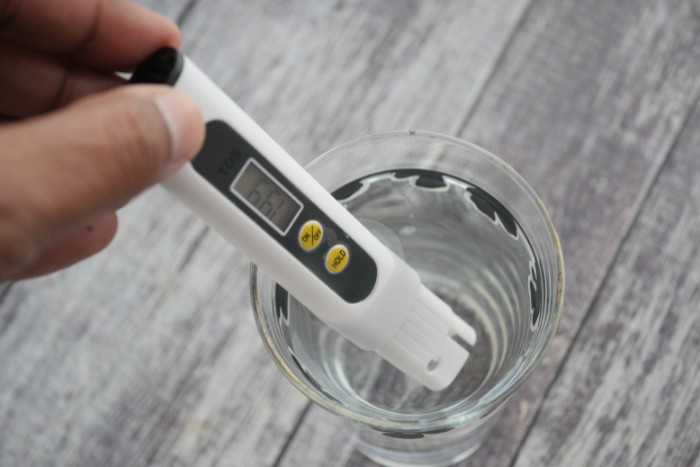
- Water hardness test: Use a TDS meter or home test kit periodically.
- Salt quality: Choose high‑purity solar salt to reduce impurities.
- Filter pre‑treatment: Consider a sediment or iron filter to protect resin beads.
- Annual check‑up: Professional service can identify hidden valve or resin issues.
Addressing Arizona‑Specific Challenges
Iron and Sediment
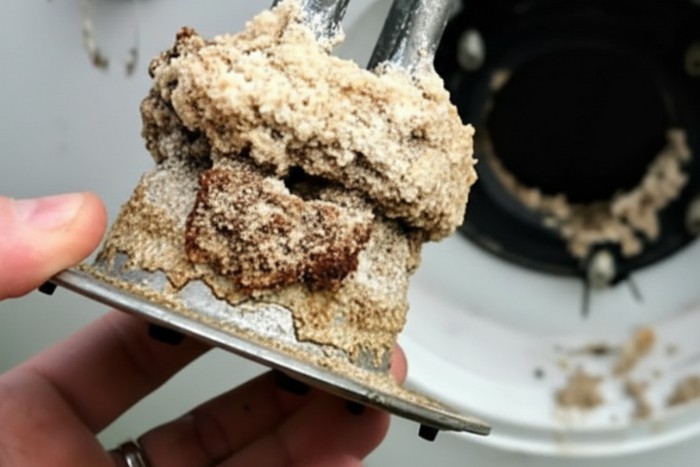
Desert water quality often carries iron and sediment, which can foul resin beads and reduce efficiency. A pre‑filter iron or sediment filter prevents buildup and prolongs resin tank life.
Salt Bridges and Mush
Phoenix’s dry climate promotes salt bridging (crusty bridges of salt that block brine creation) and salt mush (sludgy salt at the bottom of the brine tank). Regular breaks in bridges and tank cleanings prevent regeneration failures.
When Professional Service Is Necessary
While many homeowners can handle routine cleaning, some situations call for a qualified water softener technician:
- Persistent leaks or low water pressure
- Resin replacement due to fouling or degraded performance
- Control valve repair or replacement
- Ongoing iron or sediment issues
- Frequent regeneration failures
A professional can also perform a comprehensive system check and ensure your hard water treatment is optimized for Phoenix mineral conditions.
Final Checklist: DIY Water Softener Cleaning
✅ Inspect the brine tank monthly
✅ Break up salt bridges or mush
✅ Inspect the brine tank monthly
✅ Clean the brine tank at least annually
✅ Check control valve screen and distributor tube
✅ Test water hardness before and after cleaning
✅ Add high‑quality salt and run a regeneration cycle
✅ Consider sediment/iron pre‑filtration
Restore Reliable Soft Water in Your Phoenix Home
Cleaning your water softener regularly ensures it continues protecting your appliances, plumbing, and water quality from Arizona’s hard water challenges. With the right tools and simple steps, you can maintain peak performance and enjoy:
- Softer laundry
- Spot‑free dishes
- Reduced scale buildup
- Longer appliance life
- More efficient water heating
Need Help Maintaining Your Water Softener?

At Clear Water Concepts, we’ve been helping Phoenix homeowners tackle hard water challenges for over 25 years. Whether your system needs routine maintenance, a deep clean, or a professional inspection, our licensed water specialists are here to help.
-Schedule a water softener service or cleaning appointment
-Ask about system upgrades or resin replacement
-Get expert advice on keeping your water soft and scale-free
Visit Clear Water Concepts or call 480-933-5457 to get started today.
Protect your plumbing, appliances, and peace of mind—trust the Phoenix water experts.