(480) 373-9949
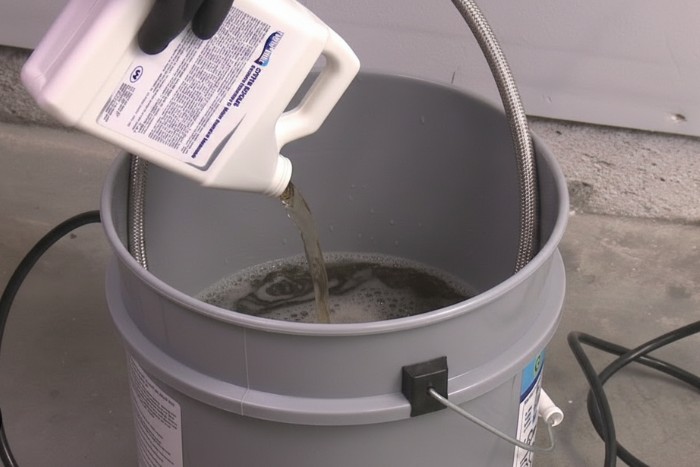
If you live in Phoenix and have ever noticed a crusty white buildup around your faucets, low water pressure, or cloudy spots on your dishes, your home may be affected by hard water scale. But what exactly is descaling, and how does it protect your plumbing and appliances in Arizona’s hard water environment?
This guide explains the descaling process, its importance in desert climates like Phoenix, and how it compares to water softening systems. Whether you’re dealing with calcium deposits, magnesium scale, or you’re just trying to reduce your energy bills, this article will help you understand the role descaling plays in protecting your home.
What Is Descaling?
Descaling is the process of removing limescale buildup, a chalky deposit primarily made up of calcium and magnesium minerals found in hard water. Over time, these minerals form hardened layers inside your water heater, plumbing pipes, appliances, and fixtures, reducing performance and causing expensive damage.
While descaling is commonly associated with coffee machines, it’s even more critical for homes in areas like Phoenix, where water hardness often exceeds 15–20 grains per gallon (gpg).
Why Phoenix Homes Need Descaling
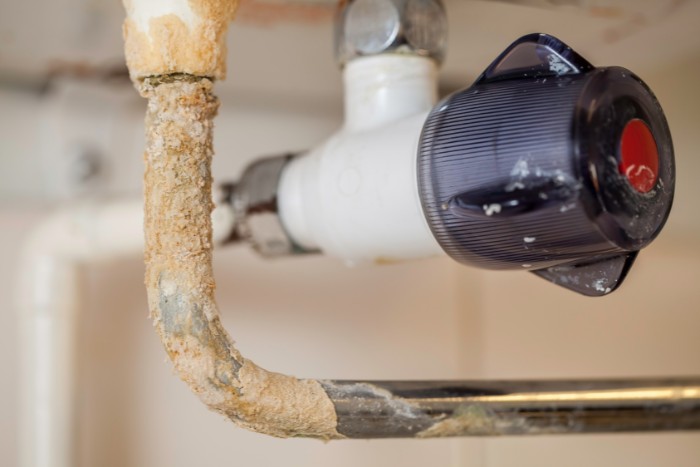
The Phoenix water supply is sourced primarily from the Colorado River, Salt River Project, and local groundwater, all of which are mineral-rich. These sources contribute to some of the highest hard water levels in the country.
Common effects of mineral scale in Phoenix homes:
- Reduced water pressure from scale-narrowed pipes
- Higher energy bills due to reduced water heater efficiency
- Shortened appliance lifespan (dishwashers, washing machines)
- Soap scum, spotty dishes, and dry skin or hair
- Clogged faucet aerators and showerheads
If you’ve noticed any of these signs, descaling or water softening may be necessary to restore performance and protect your home.
What Minerals Cause Scale?
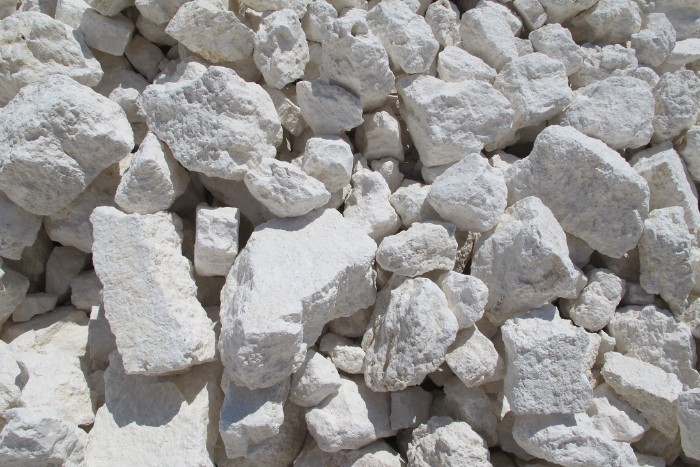
The primary culprits behind scale in Phoenix are:
- Calcium carbonate
- Magnesium hydroxide
- Iron (in some areas)
- Silica and sediment
These minerals are dissolved in your tap water. When heated or pressurized (as in water heaters and pipes), they crystallize into hard mineral scale.
Descaling vs. Water Softening: What’s the Difference?
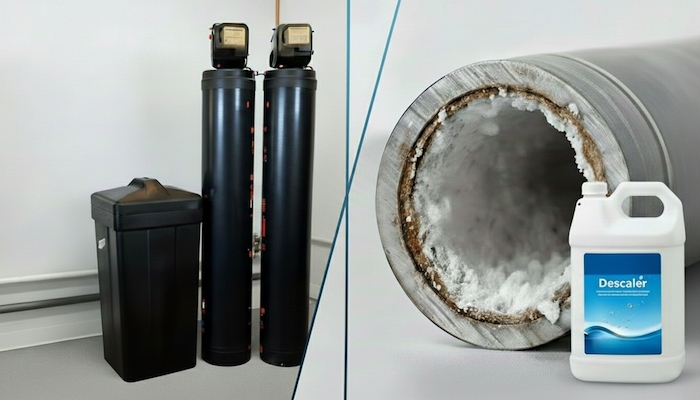
Although both address hard water problems, descaling and softening serve different roles:
| Feature | Descaling | Water Softening |
| Function | Removes scale buildup | Prevents scale from forming |
| Method | Uses acids or cleaners to dissolve scale | Uses ion exchange to remove minerals |
| Best For | Periodic maintenance and restoration | Continuous scale prevention |
| Frequency | Every 6–12 months | Ongoing (system always running) |
| Applies To | Water heaters, pipes, appliances | Entire home water supply |
Most Phoenix homeowners benefit from both approaches, using water softeners for daily protection and professional descaling for annual maintenance.
Descaling Water Heaters: Tank & Tankless Systems
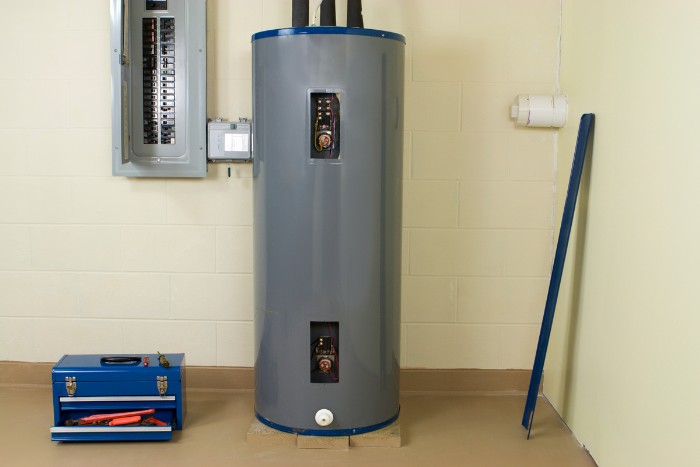
Tank Water Heater Descaling
- Buildup accumulates at the bottom of the tank over time, insulating the heating element.
- This reduces heating efficiency and leads to higher energy use.
- Descaling involves draining the tank and flushing it with acid-based cleaners or vinegar solutions to remove mineral buildup.
Tankless Water Heater Flushing
- These units are more efficient but more sensitive to scale.
- Buildup can block heat exchangers and sensors.
- Regular flushing kits or professional service ensure clean internal components.
Manufacturer recommendations often suggest descaling every 6–12 months, depending on your water hardness and usage.
DIY vs. Professional Descaling
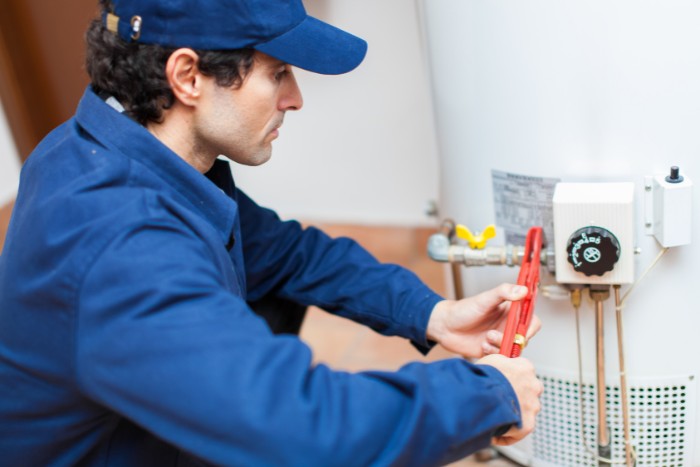
DIY Descaling Methods:
- Vinegar descaling: Good for faucets, showerheads, and kettles.
- Citric acid descalers: Non-toxic and safer for home use.
- Descaling kits: Available for tankless water heaters.
Important: Always follow safety guidelines when using chemical descalers. Wear gloves and ventilate the area.
Professional Descaling:
- Recommended for whole-house systems, tankless units, and severe buildup.
- Professionals use acid-based cleaners, special pumps, and flushing systems.
- They also inspect for sediment buildup, clogged lines, or heat exchanger damage.
Learn more about professional water treatment solutions at Clear Water Concepts.
Signs Your Home Needs Descaling
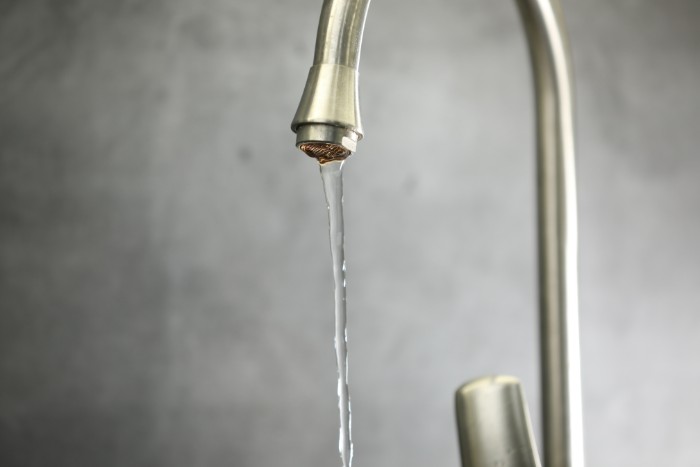
- Water pressure is noticeably lower
- Faucets and showerheads have white, chalky buildup
- Appliances like dishwashers or washing machines underperform
- Water heater makes popping or rumbling sounds
- Higher-than-normal energy bills
- Soap doesn’t lather easily or leaves residue
- You notice spotty dishes, dry skin, or soap scum in tubs
How to Test for Hard Water and Scale Risk
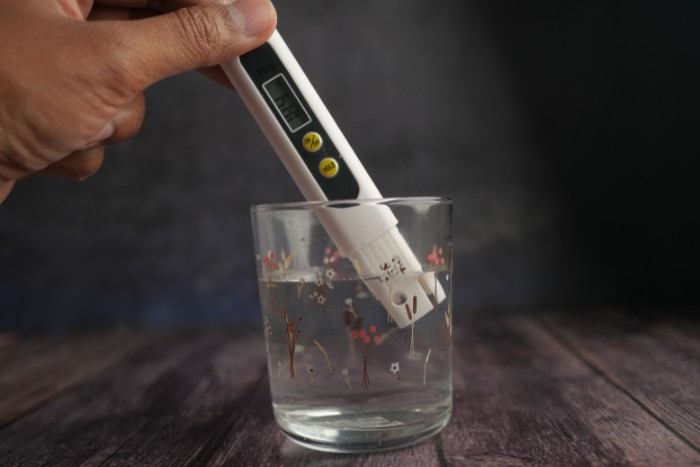
Use a home water test kit to measure:
- Hardness (gpg or mg/L)
- pH levels
- Iron content
- Total dissolved solids (TDS)
Phoenix water often tests at 15–20 gpg, which is considered very hard. This puts most Valley homes at high risk for limescale.
How Often Should You Descale?
Descaling frequency depends on:
- Your water hardness level
- Appliance type (tank vs. tankless heater)
- Household water usage (family size, daily habits)
- Presence of a water softener
For most Phoenix homes, descaling should be performed annually, even if a water softener is installed.
Protect Your Phoenix Home Long-Term
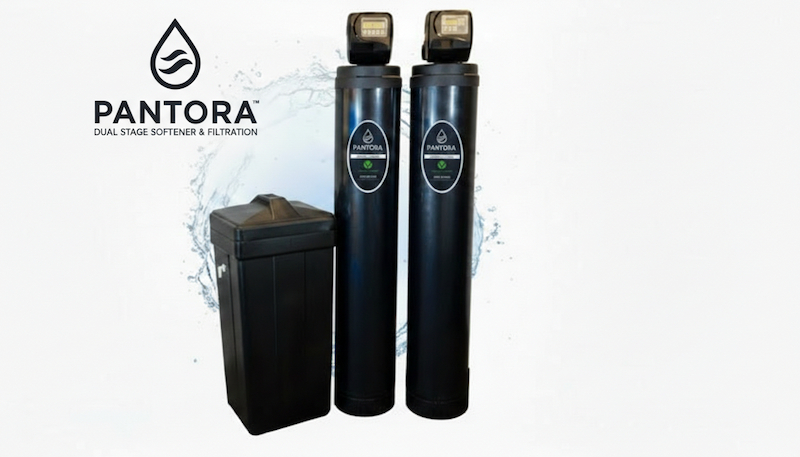
Hard water is a constant in the Arizona desert. While descaling is essential for maintenance, a more permanent solution is installing a whole-house water softener or filtration system.
Explore options at:
- Water Softeners & Conditioners
- Reverse Osmosis Systems
Why Choose Clear Water Concepts?

As a trusted water treatment company serving Phoenix and the surrounding areas since 1998, Clear Water Concepts specializes in hard water treatment, whole-house filtration, and professional descaling services. We offer custom water systems designed for Arizona water conditions and reliable service from certified technicians.
Don’t Let Scale Take Over
Descaling is a necessary part of living in Phoenix. It keeps your plumbing, appliances, and water heater running smoothly while protecting your investment.
Don’t wait for damage to occur. Get proactive and schedule your water treatment consultation today.
Contact Clear Water Concepts to get started with your water hardness test or descaling service.